- Analysis & Expertise
- Analysis & Expertise
Black Stork Tag Project
- Type of services provided GPS Telemetry and the Ecology of the Black Stork
- Ongoing 2025-2027
- Location Europe, Africa
- 12 black storks to be fitted with GPS tags by 2027
- 6 countries crossed
- 3 different nesting contexts in Wallonia
In 2019 and 2021, Ecofirst conducted an initial GPS tracking program for black storks as part of the Nassonia project, equipping two adult breeding individuals with high-precision GPS tags. The first stork transmitted data until July 2023, while the second is still transmitting today, more than five years after its transmitter was fitted.
This monitoring has provided valuable data on the stork's use of its habitat during the nesting period and its interactions with human infrastructure. The results of this work have been published in two scientific articles in Walloon naturalist journals: Forêt.Nature, No. 170 (2024) and Aves, No. 62/3 (2025).
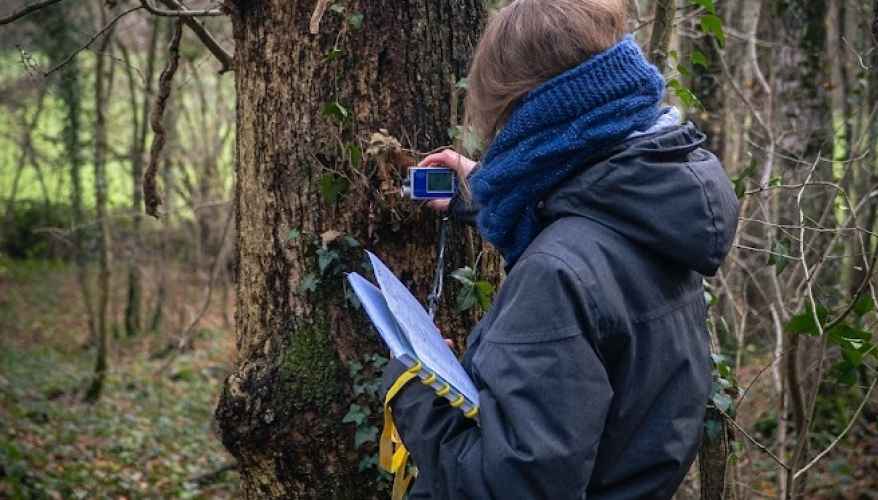
Building on these years of experience, Ecofirst launched the Black Stork Tag project in 2025, in collaboration with Renner Energies and Luminus. Scheduled to run from 2025 to 2027, this project aims to equip twelve black storks with GPS tags.
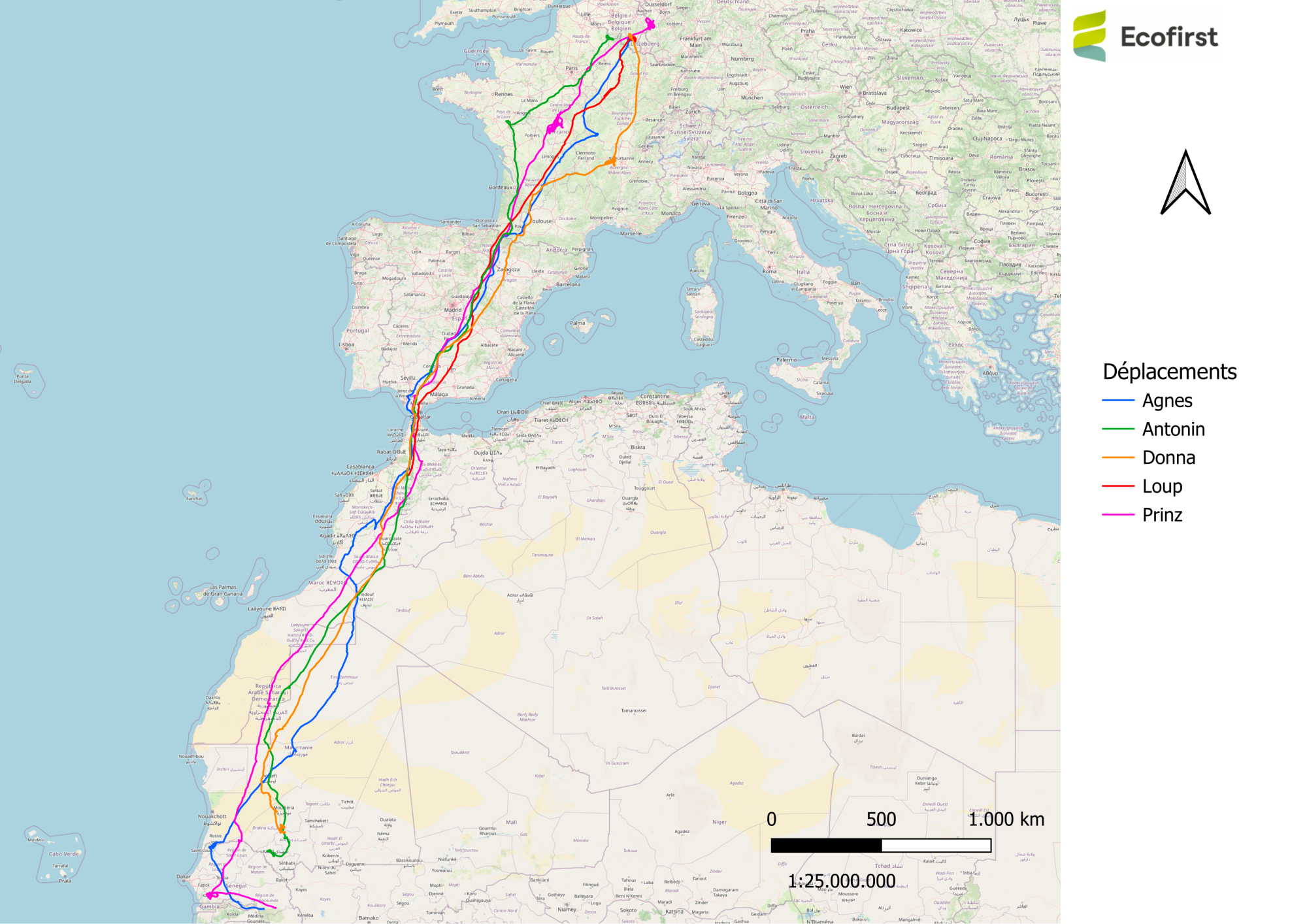
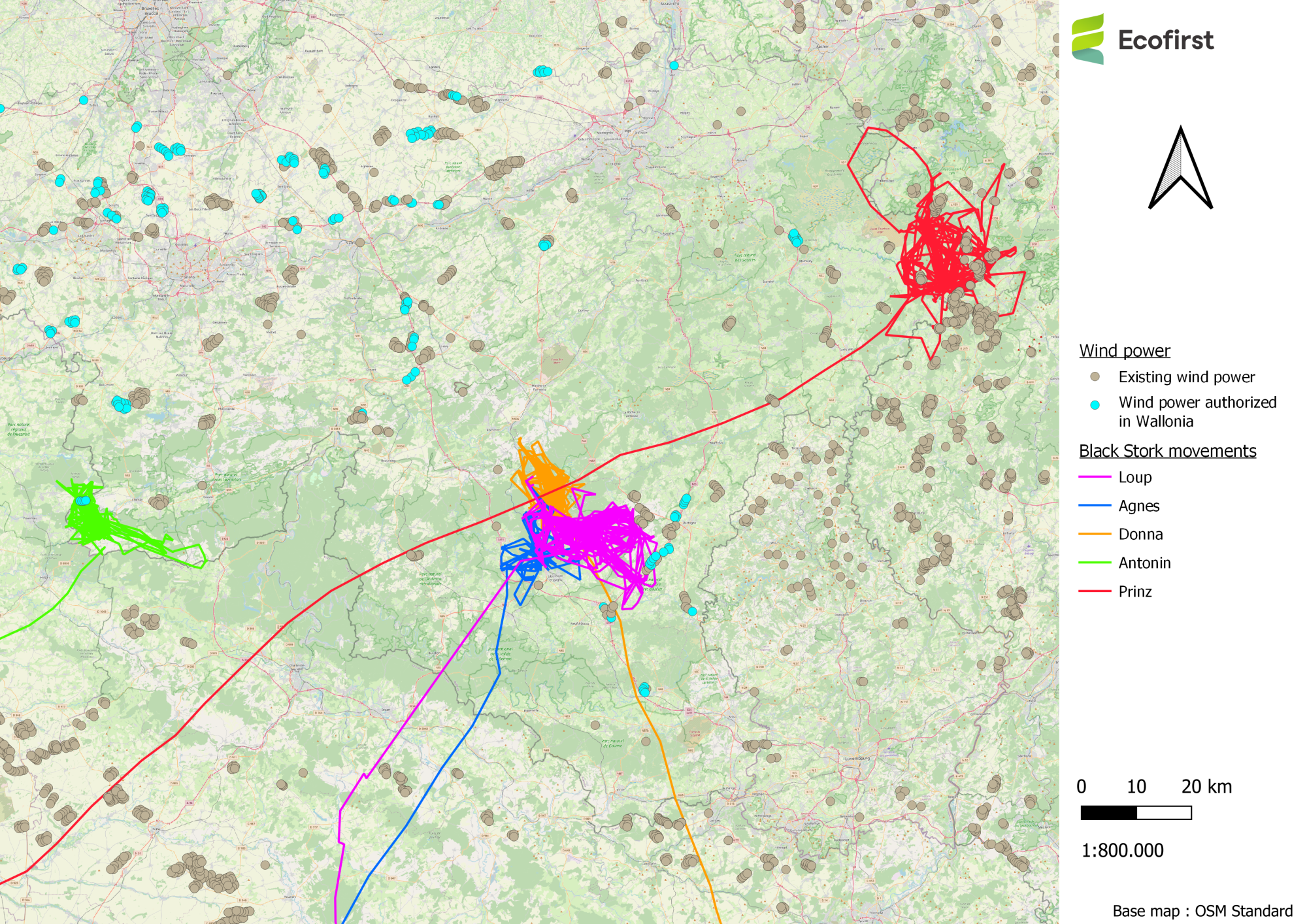
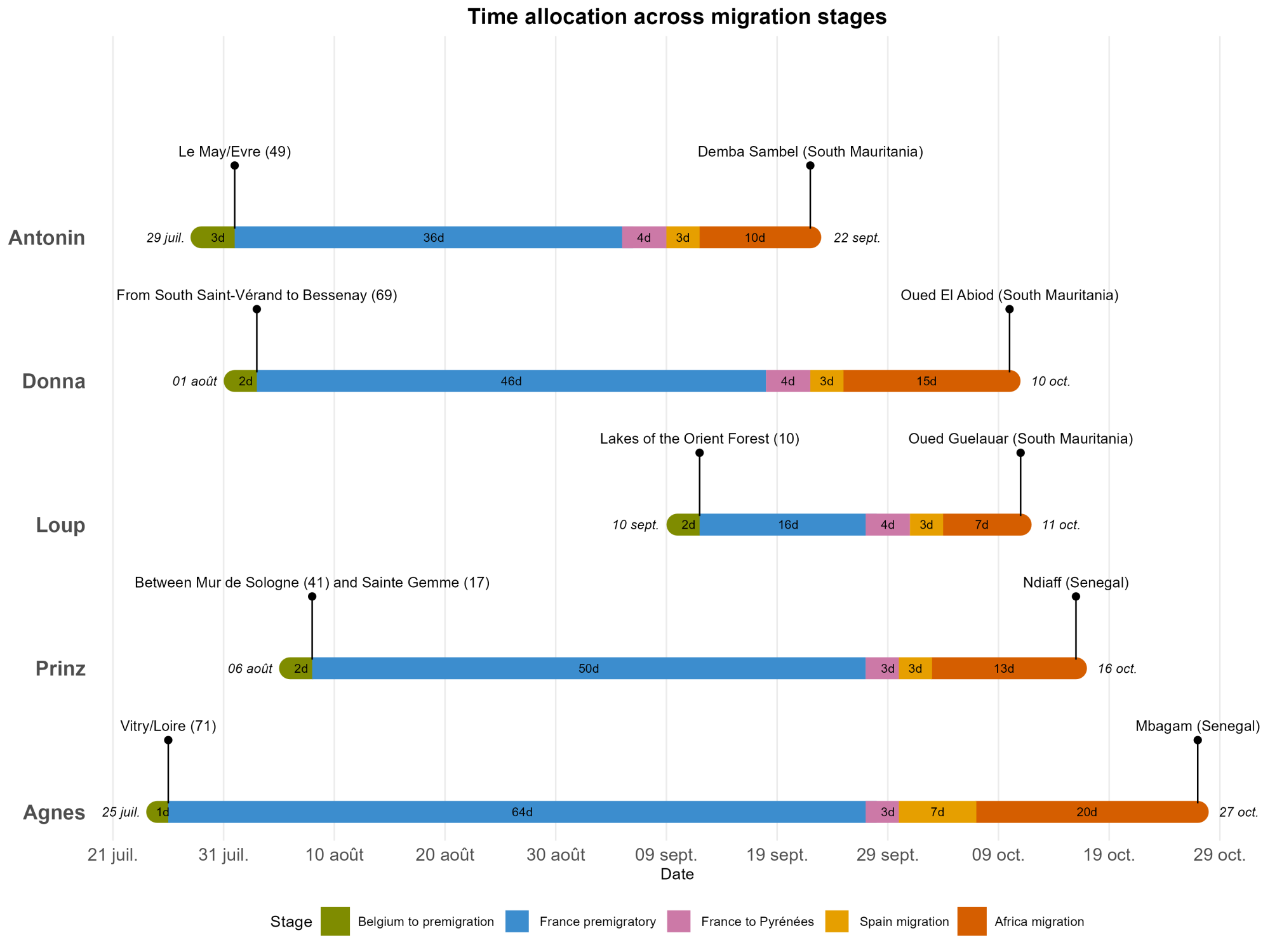
The data collected will provide a deeper understanding of the ecology of the black stork at all stages of its life cycle, in particular through the characterization of nesting, pre-migration, and wintering areas, the study of migratory movements, the analysis of competition between nearby nesting pairs, fidelity to a sub-watershed, the characterization of nests, the typology of streams and ponds frequented, etc. It will also contribute to a better understanding of the species' actual sensitivity to human infrastructure, particularly wind farms.
One component of the project is therefore to fill the gap in objective scientific data on the coexistence of black storks and wind turbines. Our discussions with various stakeholders and analysis of the literature show that this lack of data encourages subjective interpretations, sometimes influenced by ideological positions on wind power. Through the Black Stork Tag project, Ecofirst aims to build a robust, documented, and reproducible database that will contribute to a better understanding of the interactions between black storks and wind turbines, thereby facilitating well-informed decision-making.
Our expertise for this project:
- Coordination: O. Noël
- Expertise in GPS tagging and stork ringing: G. Jadoul
- Research, cartographic and statistical analysis: L. De Neyer, O. Noël